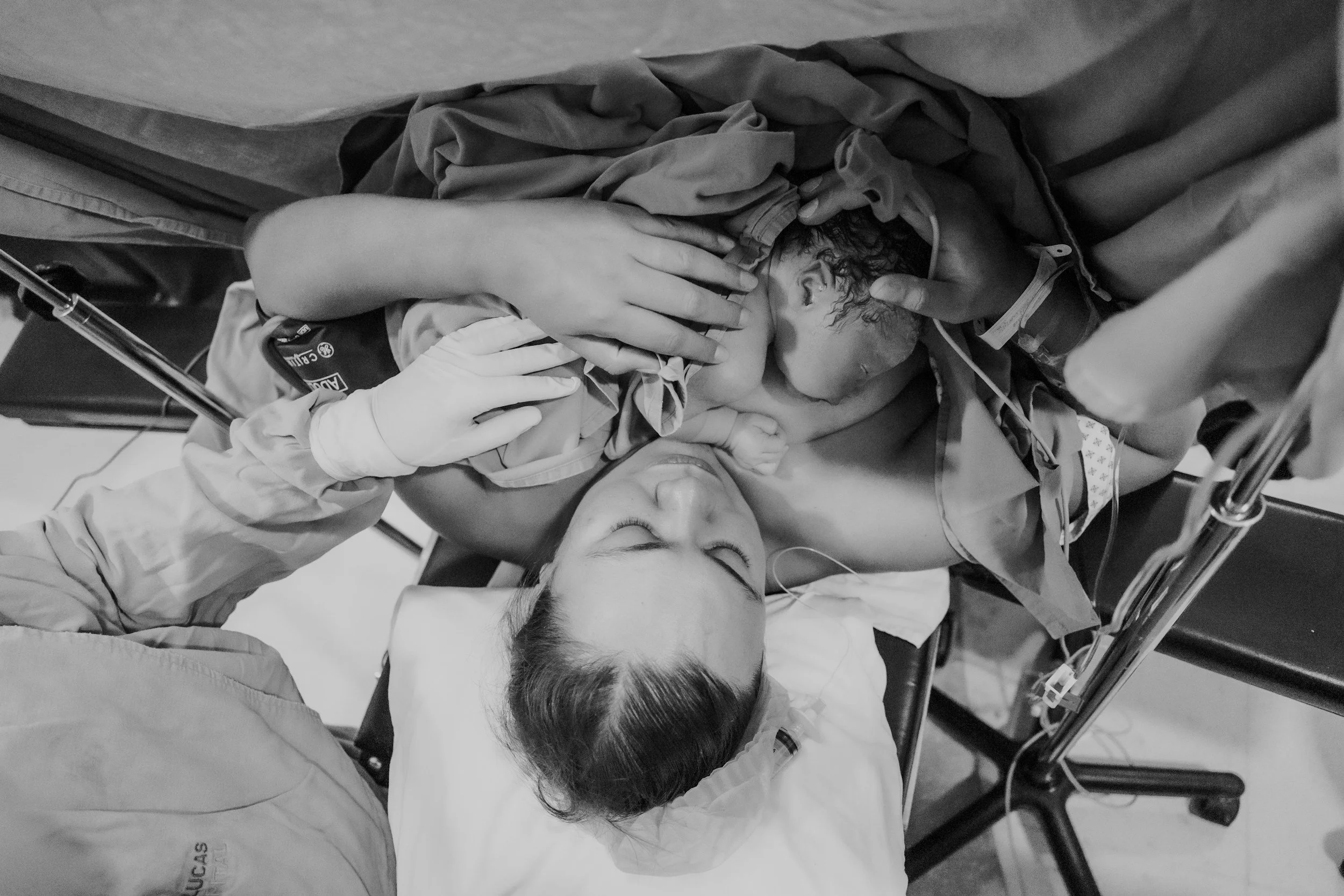
Skin-to-skin contact is one of the oldest practices in childbirthing, and for good reason. Back before the times of traditional Western medicine, the first place your baby was placed was on your chest. Skin-to-skin. Full of afterbirth goo, moments after leaving the birth canal, those first few moments were a precious and important part of bonding with your newborn baby.
At some point, that practice was lost within Western medicine, opting instead for “twilight sedation” techniques, immediate cord cutting, baby cleaning and feeding away from the birthing parent, and other choices that kept a baby and new parent from proper bonding. To be clear, this doesn’t mean that babies who weren’t able to have skin-to-skin for one reason or another are not bonded to their parents - certainly not. We’re going to explore the benefits of practicing skin-to-skin together!
What It Is
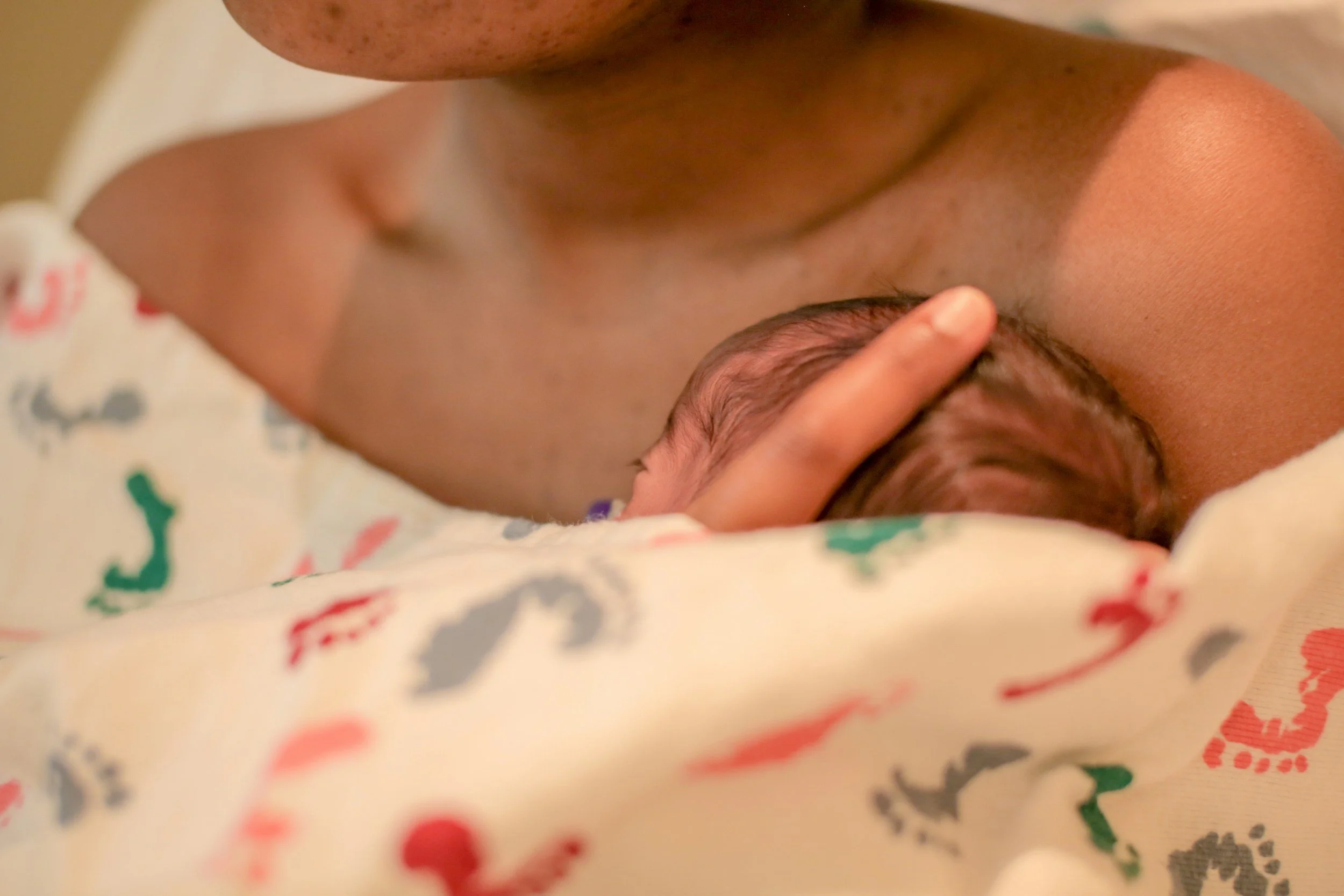
Skin-to-skin contact, sometimes called “kangaroo care,” is the practice of placing a newborn directly against a parent’s bare chest, allowing them to lie “skin to skin” with their parent. Ideally, it begins moments after birth and continues for an extended period throughout the first few hours of the baby’s life.
While it’s usually the birthing parent who gets first dibs at skin-to-skin, it doesn’t necessarily have to be the birthing parent to get the benefits for the baby. Skin-to-skin can be done with birthing parents, partners, adoptive parents, grandparents, siblings, aunts/uncles - anyone who is a part of the baby’s life can participate in skin-to-skin contact.
Why It Matters for Babies
Imagine being a newborn baby who just traveled through the birth canal. You enter a cold, bright room from your cosy nest within your parent’s body. There’s suddenly so much noise and stimulation; it’s overwhelming.
And then, you’re placed on someone’s chest. The heartbeat you’ve been hearing for 9 months starts beating against your body. You know you’re safe. You know this person holding you is safe. And you begin to relax.
According to studies, skin-to-skin contact helps newborn babies, especially pre-term or medically complex babies, thrive in a number of different ways.
Temperature. Newborns have trouble regulating their own body heat. In one study of healthy full-term newborns, those kept skin-to-skin maintained more stable temperatures than babies placed in a cot, and they cried less overall.
Breathing and heart rate. For preterm babies, the evidence is especially strong. A randomized trial comparing skin-to-skin care with incubator care found that infants held skin-to-skin stabilized more quickly in breathing, heart rate, and temperature. The World Health Organization recommends this form of kangaroo care for preterm and low-birth-weight infants as a core part of care.
Long-term outcomes. A follow-up study of preterm infants found that those who received more skin-to-skin contact showed better physiological regulation and cognitive control, with effects still visible at ten years of age.
Feeding
A Cochrane review found that early skin-to-skin contact is associated with higher rates of successful breastfeeding in the first months. Babies are also more alert and rooting when they’re on bare skin, which can make locating the breast and latching easier. Studies also show that skin-to-skin contact can help the breastfeeding parent’s milk come in faster and more reliably.
Breastfeeding triggers oxytocin release in the birthing parent, and research comparing those who gave birth by cesarean and vaginally found distinct hormone patterns during nursing, suggesting that physical closeness supports the feeding relationship.
Bonding
Early, uninterrupted contact has been linked to more responsive, attuned interactions between parent and baby in the months that follow. Those first hours and days appear to lay the groundwork for how families connect over time. Skin-to-skin doesn’t have to be perfect to count, and short sessions still help. Giving your baby a 10-15 minute skin-to-skin session daily can help the bonding process long-term.
Practical Tips
Start as soon as possible after birth, once the baby is stable. Medical teams can usually help arrange this, including after a cesarean.
Continue it over time. Many families do it during feeds, naps, or quiet afternoons.
Wear something easy to open, such as a front-opening top or a wrap.
Don’t worry if it doesn’t happen right away. Births don’t always go as planned, and skin-to-skin is one of several ways to connect. There are many other ways to bond with your baby, and ultimately, you and your baby’s health and safety come before skin-to-skin when it comes down to it.
Skin-to-skin contact has a host of benefits for family members and newborns. It helps newborns regulate temperature and breathing, supports breastfeeding, and contributes to early bonding. For many families, it’s a simple way to spend time together right after birth that feels intimate and special. And it is!
If you have questions about skin-to-skin contact, reach out! One of our amazing doulas would love to talk to you about strategies, techniques, and research to support if you have questions!